We Beautify Boats by Spike · Knowledge Catalog · Boat Ownership Intelligence
How Do I Keep a Freshly Detailed Boat Easy to Maintain?
Short answer: Start looking after the boat while it is clean, and adjust the routine to use, exposure and materials. Spike’s practical starting recommendation is weekly or biweekly washing where appropriate, not a mandatory package or a product warranty. “Be consistent, or be concerned.” The aim is manageable upkeep and a clear view of changes that deserve attention.
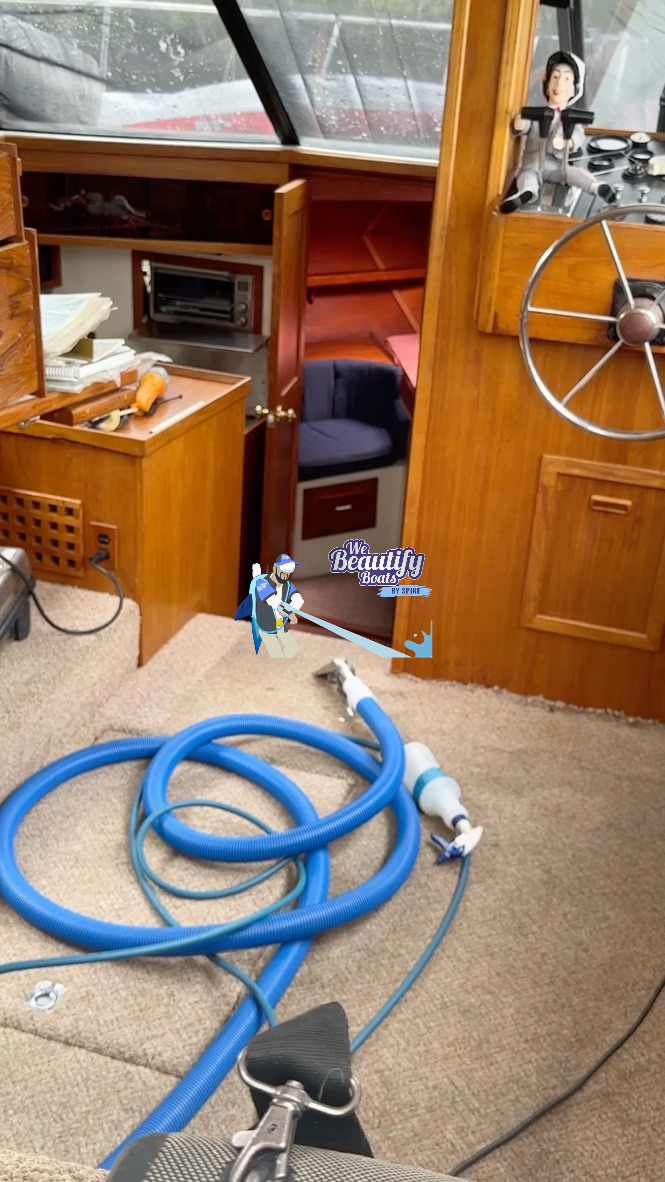
What should I ask when the detail is finished?
Ask what was cleaned or corrected, which limitations remain and what care suits the products and materials involved. Keep the agreed scope and any applicable manufacturer instructions. Gelcoat, painted panels, clear plastics, vinyl, wood and non-skid can sit close together without sharing the same care requirements.
Think of the handover as establishing a baseline: this is how the boat looks now, these areas were outside scope, and these changes should prompt a conversation. That is more useful than assuming every surface has become permanently easy to clean. A suggested visit interval is not a coating warranty or a guarantee that no further attention will be needed.
Is weekly or biweekly care right for my boat?
It is a starting point to discuss, not one rule for every vessel. Spike considers how the boat is used, its exposure, the marina environment and how often someone can inspect it. A sheltered boat used occasionally may need a different routine from an exposed boat receiving frequent guests.
Look at what happens between visits. If grime is building faster than the routine addresses it, or a damp area returns, the condition is telling you something. Do not use a calendar interval alone as proof that maintenance is sufficient—or assume an intensive service must be repeated simply because it was needed once.
- Use: Note spills, wet equipment, traffic and time aboard.
- Exposure: Check for changes after rain, fallout or a spell left closed up.
- Material: Follow the relevant finish and equipment care requirements.
- Condition: Investigate a returning stain or damp patch instead of repeatedly hiding it.
- Access: Keep routine care within safely reachable areas; do not dismantle fittings to extend a clean.
Which service maintains the result?
The deck wash options separate routine upkeep from deeper cleaning. Interior detailing options make a similar distinction. Interior Level 1 maintains an already serviceable cabin. Level 2 goes deeper into conditioning, cupboards and lockers, but excludes steam, bilge and engine-room work.
Choose the boat’s current condition rather than automatically repeating its previous service label. A maintenance visit should not be expected to correct an issue outside its scope, while a successful reset does not mean the same intensive treatment is needed at every visit. Spike can help set that boundary at the handover or assessment.
What can I do between professional visits?
Remove food and organic debris, attend to ordinary spills with material-appropriate care and avoid leaving wet belongings in enclosed spaces. Check safely accessible areas for new deposits or returning water. Allow suitable drying and ventilation within the vessel and facility’s requirements.
Use compatible products according to their instructions rather than increasing strength whenever a mark resists cleaning. Different finishes can need different treatment. If you are unsure what was applied or what a surface is, ask before experimenting. A new fragrance or a stronger cleaner is not a repair for a continuing leak.
The EPA’s moisture guidance explains why moisture control belongs alongside cleanup. It concerns buildings rather than specifying marine treatments; aboard, it reinforces the practical need to address returning water instead of relying on repeated cleaning alone.
What if the boat becomes difficult to maintain again?
Tell Spike what changed and when. A stain that quickly returns, a different response from a finish or water where an area was dry is useful information. A reassessment may point to a new source, a different cleaning need or work for a qualified marine specialist.
Detailing cannot fix a defective pump or leak, and it does not replace mechanical servicing or winterization. Those belong with qualified trades. Photos can help explain a change, but cannot settle hidden condition or access; the assessment guide explains what Spike checks at the boat.
How should I plan the cost?
Ask for the tasks and exclusions, not just a frequency. Price follows pre-service condition, size, substrate, access and the work agreed. There is no automatic rule that costs double because an interval was missed. Current recurring maintenance interests remain planning-only, subject to assessment and review; historical seasonal-plan articles are not current contracts.
An assessment is $250 CAD, credited in full toward services approved after inspection. Arrange an assessment with Spike to discuss a routine that suits your use and the boat’s condition. His firsthand advice is to maintain the result consistently, notice changes and respond appropriately—not buy more treatment than the boat needs.