We Beautify Boats by Spike · Knowledge Catalog · Interior & Onboard Living
Why Does My Boat Still Smell Musty When the Cabin Looks Clean?
Short answer: A boat can look clean at eye level while standing water, organic deposits or damp enclosed spaces remain below it. Spike starts with accessible bilges, graywater or shower traps, locker seams and the reason water is there. A musty smell is a useful clue, but it does not identify mold type or tell you whether the air is safe.
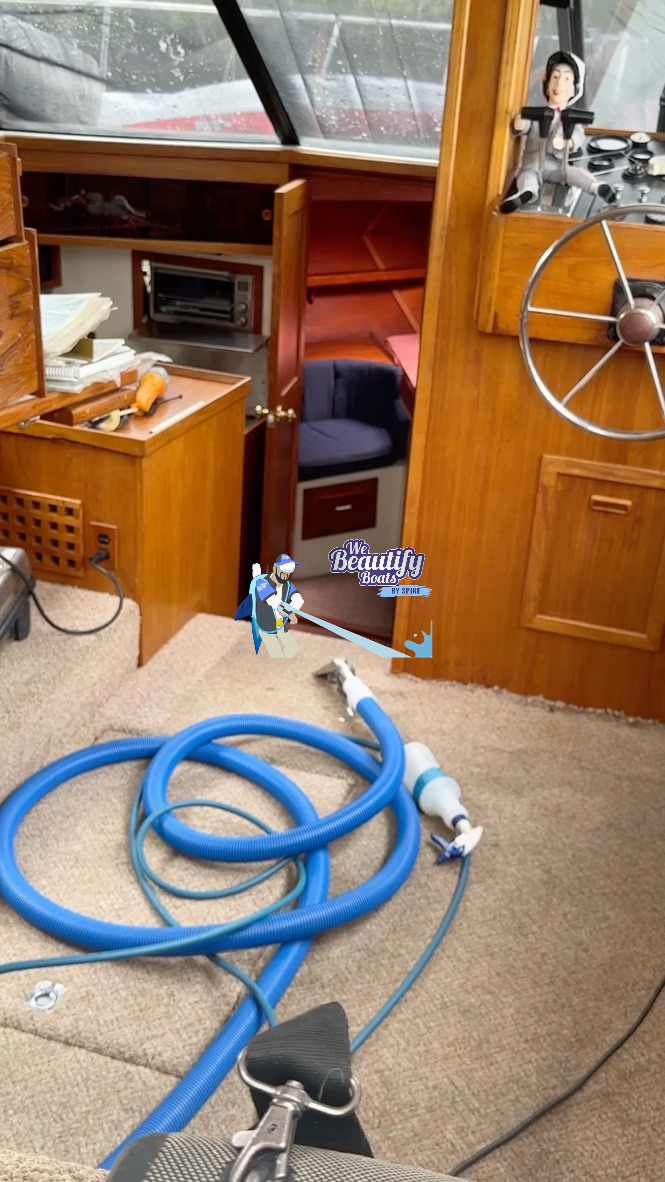
Where should I start looking?
Think about when and where you notice the smell. Is it strongest after rain, after the boat has been closed, near a shower, inside a locker or beside an accessible sole panel? Tell Spike about recent spills, leaks and maintenance. Those observations help plan the inspection without asking you to dismantle the boat.
A clean galley counter does not tell us what is happening underneath it. Equally, a smell near one compartment does not prove the entire cabin needs the most intensive service. The useful starting point is a pattern of observations, followed by an in-person look at the areas that can be reached safely.
- Water: Is an accessible compartment wet, and does water return after it has been removed?
- Deposits: Is there visible debris or residue in a trap, seam or compartment?
- Material: Are we dealing with a hard liner, carpet, cushions, headliner, wood or deteriorating structural material?
- Access: Can the area be reached through its normal opening without disconnecting hoses or disturbing equipment?
Leave aging fittings and plumbing alone. If investigating requires disconnection, or you suspect a failed pump or hose, bring in a qualified marine specialist first. A suspected fuel leak or another immediate safety concern needs prompt specialist attention, not a detailing appointment.
Why does the smell sometimes return after cleaning?
Cleaning deposits and fixing the reason an area stays wet are two different jobs. A freshly cleaned surface can become damp again if a leak continues. Material behind fixed equipment can also remain beyond the agreed cleaning scope. Drying matters alongside cleaning.
The EPA’s moisture and mold guidance explains that a water problem needs attention as well as cleanup. It is building guidance, not a boat-treatment specification, but that distinction is useful aboard too: washing a compartment is not the same as resolving the source of its moisture.
Which interior service is the right starting point?
Spike separates maintenance from deeper work. Interior Level 1 looks after a cabin already in serviceable condition. Level 2 goes further into conditioning, cupboards and lockers, but excludes steam, bilge and engine-room work. Level 3 can include intensive steam-based work and cleaning in accessible bilge and engine-room areas, where materials and access allow it. Serious contamination needs a specifically assessed Level 4 scope.
You do not need to diagnose the level before asking for help. Review the interior detailing options and, if relevant, accessible engine bay cleaning. At the boat, Spike can explain which surfaces can be cleaned, what improvement is reasonable and what needs another trade.
What can cleaning achieve?
The aim is to remove reachable deposits, clean suitable materials and agree on an appropriate drying plan. It is abatement of accessible contamination, not complete remediation through disassembly. Detail work cannot repair a leak or failed pump, replace rotten structural material, or clean through a permanently enclosed space.
A better smell is welcome, but it is not a laboratory result or air-safety certificate. Where contamination or material damage needs specialist investigation, that comes before a finishing recommendation. Odor alone is not a reason to prescribe ozone, and this guide does not recommend it as a diagnostic or treatment shortcut.
What about dirty bilge water?
Collection and disposal are part of planning the work. Do not discharge contaminated water overboard or assume detergent makes it acceptable. Follow the facility’s arrangements and applicable environmental requirements.
New York Sea Grant’s bilge-cleaning guidance explains why bilge water may contain oil, fuel and other contaminants. It provides environmental background, not permission to discharge water in Ontario. Tell Spike about known contamination so handling can be considered before the visit.
What determines the cost?
Length matters, but so do pre-service condition, the number of accessible compartments, material sensitivity, deposit severity, water handling and the agreed scope. One cabin photograph cannot establish all those variables. An in-person assessment costs $250 CAD, credited in full toward services approved after inspection. The service scope and price are confirmed after examining the boat.
What should I send Spike?
Share planning photos, the boat’s location and your observations about where and when the smell appears. Keep inaccessible areas undisturbed. Arrange an in-person assessment with Spike, and use the visit to separate the cleaning work from any repairs needed first. For a closer look at that process, read what an assessment can establish beyond photographs. This guidance comes from Spike’s firsthand mobile Ontario detailing practice.